Greetings once again readers! Many, many thanks to those who keep coming back and to those new ones who’ve subscribed in the past week! And before you ask, no, I’ve not been fishing in a while again. *sigh*
For this week’s post I was inspired by my brother, though accidentally. You see I’m quite the movie quote guy and it all started as a kid with my little brother. We watched tons of movies growing up in the 80’s and with the introduction of the VCR we got to re-watch them repeatedly. I still remember the thrill we had from being ‘gifted’ our own blank, VHS tapes to record our favorite movies! Woo, thanks Dad! You get the idea, we watched a lot of things over and over. One in particular was, “A Christmas Story.” This movie, like so many others, we know by heart and use lines from them in our everyday life.
 So when my brother used ‘fudge’ in a recent tale about him swimming with sharks it got me thinking about foul language in our writing.
When is it acceptable? How often can you use it, or should you use it? Can it be replaced with another word like, ‘fudge’, or ‘chert’? (That last one is a little nod to a friend’s Sci-Fi series, The Terminarch Plot, check it out!)
I’m no expert on any subject of writing, but I am a writer and I have my own opinions on it. That’s why you’re reading this, right? In many ways, I think it comes down to two main things: your target audience, and the characters in the story. There’s also the notion that some foul words are just more acceptable in everyday life, like ‘damn’, and sometimes the synonym of ‘crap’. Depends on which television channel you’re watching I suppose.
However this doesn’t change the fact the TV writers are taking into account each line of dialogue to best express what that character is trying to say. How different would Friends be if it was full of dirty dialogue? Don’t get me wrong, there’s still some colorful adult references here and there at times, but it would be a different show if it was peppered with the actual words. 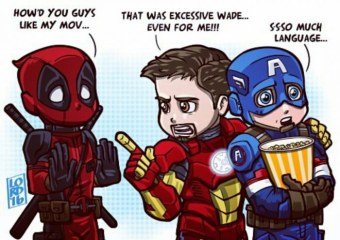 Similarly, imagine this years’ mega-hit movie, Deadpool without the extreme foul language. Love it or hate it, the producers had a specific target audience in mind all along, and they reaped the rewards for it. Had they backed off last minute and softened it to a PG-13 rating, I’m not convinced it would’ve been the smash hit it was. Instead they delivered on the promise of going excessively over the top with outrageous, language and more, but with heart.
Similarly, imagine this years’ mega-hit movie, Deadpool without the extreme foul language. Love it or hate it, the producers had a specific target audience in mind all along, and they reaped the rewards for it. Had they backed off last minute and softened it to a PG-13 rating, I’m not convinced it would’ve been the smash hit it was. Instead they delivered on the promise of going excessively over the top with outrageous, language and more, but with heart.Same idea goes with your writing. You’re most likely NOT using foul language if you’re writing a YA romance with the vampire of your dreams. Neither would you write a werewolf horror adventure where the beast hunts down gang members without some occasional blue language. (Note to self: write werewolf story!)
 Then there’s character traits, and personalities to consider. A bad guy is holding a gun someone’s head and says, “I’ll shoot her in the head, I swear it!” Is that enough to invoke the feelings you want in the scene or should it be, “I’ll splatter her f***ing brains all over the f***ing wall a**hole!” Seems to raise the tension, doesn’t it? On the other hand, a character who curses like a sailor at sea in the beginning of your tale, may change and start catching themselves due to whatever growth you’re putting them through. And let’s face it, some characters are going to be douchebags and curse without restraint, but that doesn’t mean they all need to.
 Any good writer is going to review, edit, stress out, and debate every single line of their manuscript before releasing it to the public. You need to do this to ensure it is the best possible product you can provide. Ask yourself, does my character’s words sound mechanic, or does it sound like the way someone actually speaks? Also, is the foul language I’m using trite, therefore it’s lazy writing, or is it necessary for the what I hope to accomplish in the scene?
Now I’m the last person to preach on a soapbox about language, trust me. I just think when it comes to telling a story whether that be a novel, a movie, or even a song, there are good times and bad for using it. Don’t let the language you use be like the obligatory, awkward nude shot present in so many movies! It’s not necessary to move the story along and only there to please a few people, and I believe your audience can tell the difference. Choosing your words wisely could be what makes your story stand out from being just another book, or a best seller.
Now go write that damn book!
 Jason A. Meuschke